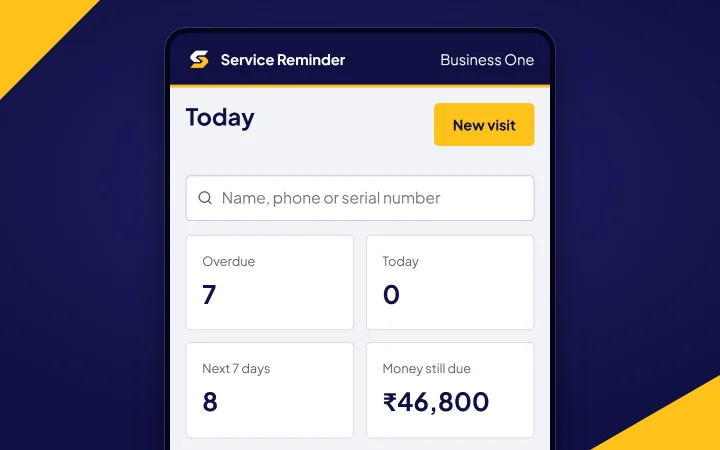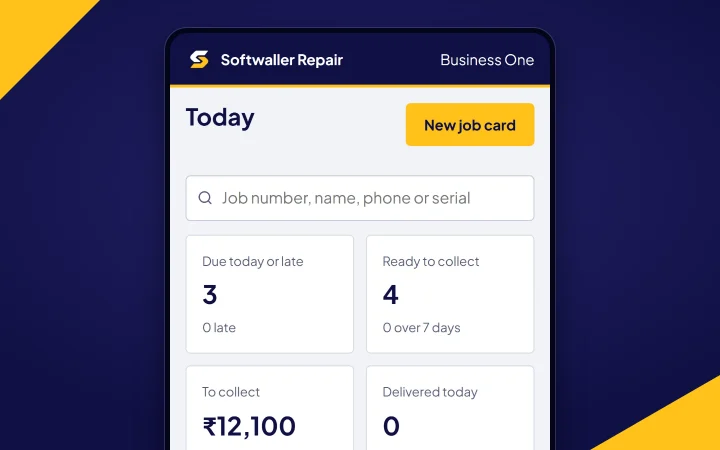
A made-up story to show how the tool is meant to help. It is not about a real customer. The tool is planned and not ready yet.
Imagine this business
Imagine a small fabrication shop or wholesaler that sells on credit. The bills are in a book. The money is with the buyers. Asking feels awkward, so it waits.
The app in this story is being built: it is planned, not ready yet for the public. See payment follow-up.
Morning: whom do I call today?
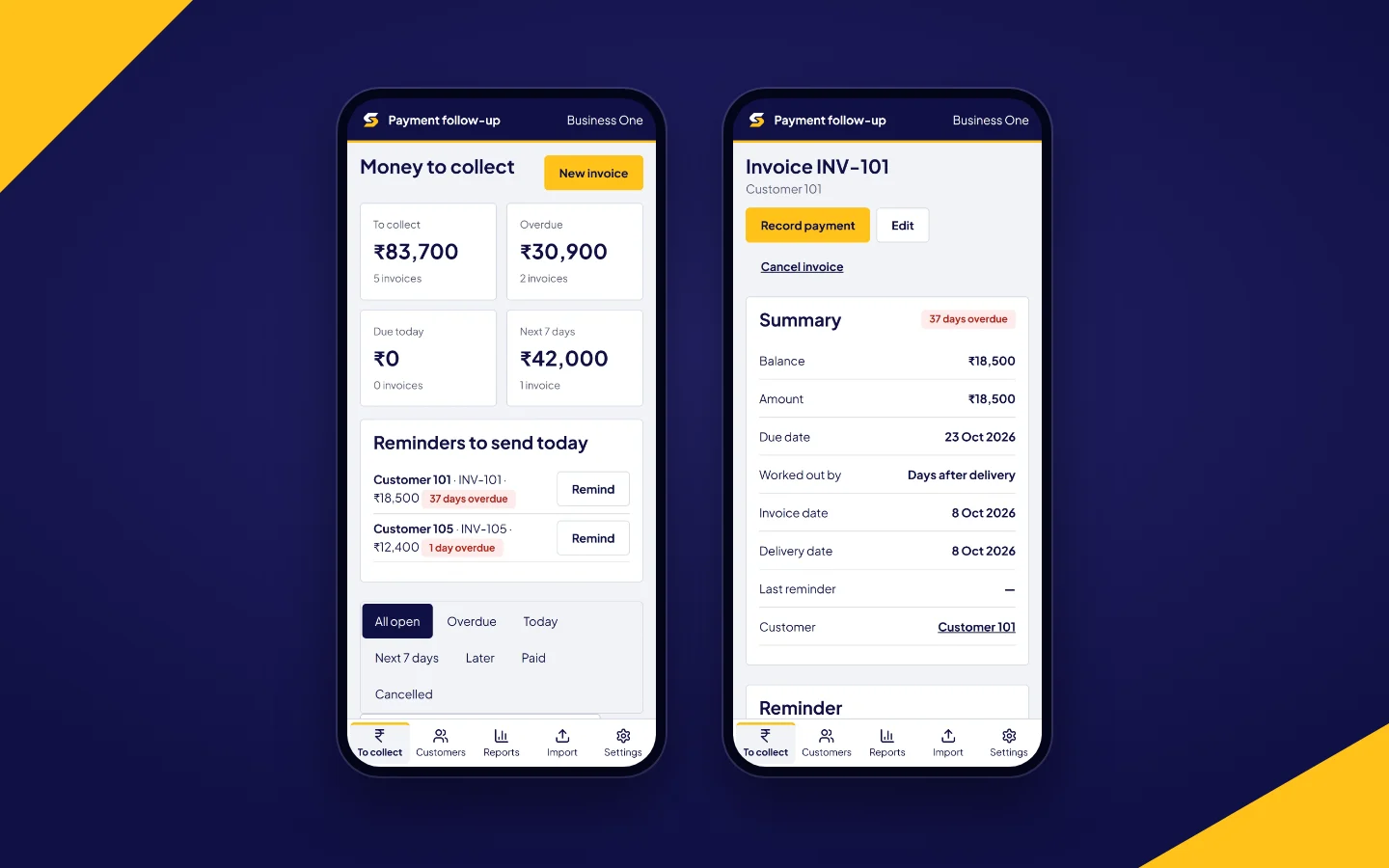
A "Call these today" list shows buyers ranked by how much is owed and how late it is, with call and WhatsApp beside each one. One message can cover all of a buyer's due bills.
A new bill
Goods are delivered. You add the invoice: buyer, number, amount and the days allowed. In India, a helper works out the 15 or 45 day date for micro and small suppliers; retail and wholesale traders are excluded. It is a date helper, not tax or legal advice: read the rule in plain words and ask your accountant.
"I will pay on Friday"
You note the promise and its date. On Friday it is in front of you instead of in your memory. On a paid plan you can record part payments, and see which promises were not kept.
"What do I owe you?"
You open the buyer and show a statement on screen, with the history of invoices, payments and notes. On a paid plan you can send a link to that statement and add a UPI payment option for a business in India. Money goes straight to you; the app collects nothing and does not confirm payment.
End of the week
On a paid plan an ageing view shows how old the unpaid amounts are, and charts show what is coming in.
What still needs care
- It needs internet.
- One payment that covers several bills has to be recorded bill by bill.
- Credit notes, returns and discounts at settlement are not handled.
- It does not read bills from accounting software; on a paid plan you can import a CSV file.
- This day is imagined. Tell us how you follow up today.